
Same Here
Or as we once said, "Ditto."

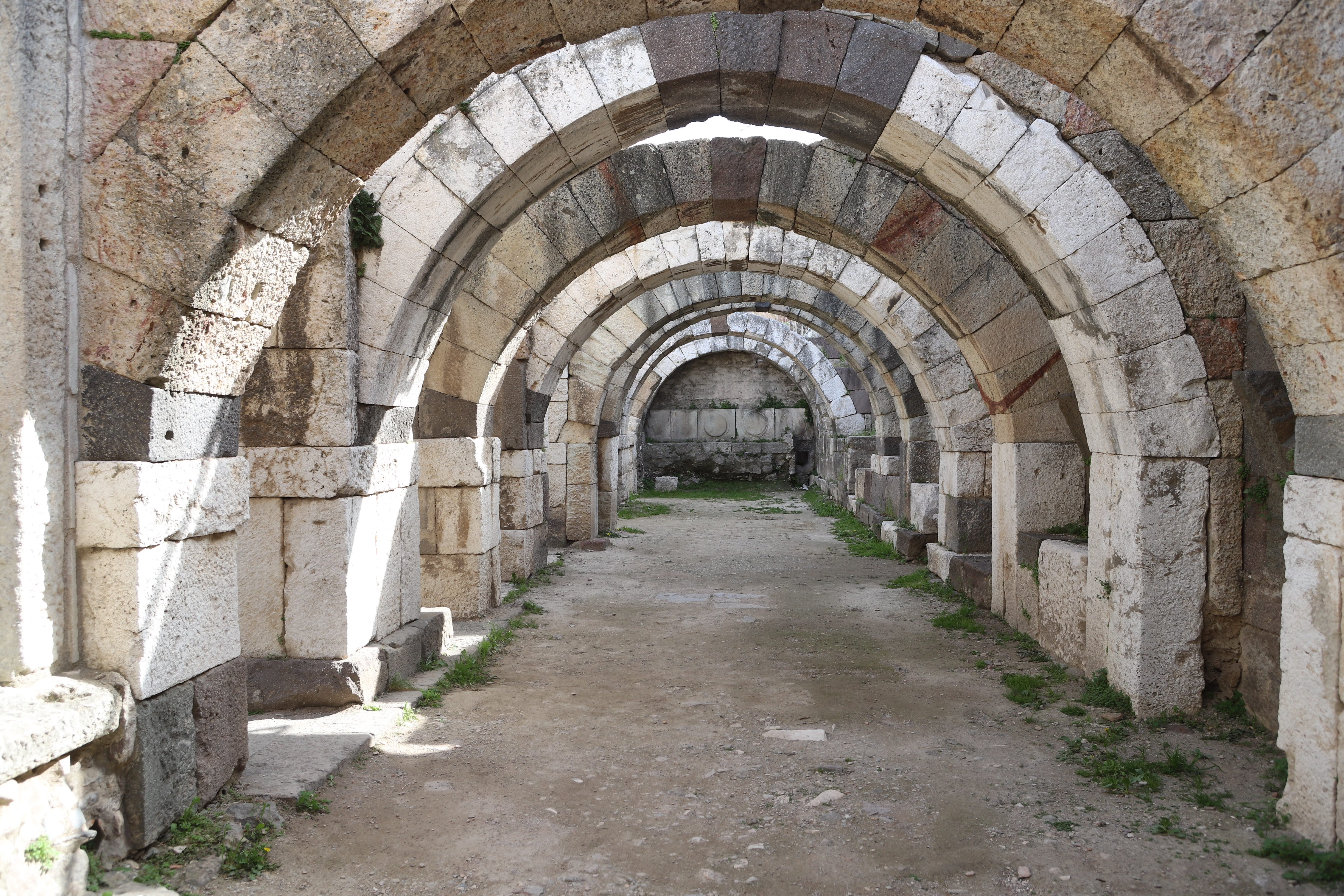
One of the first responses to a few photos I posted on social media while in Turkey emphasized how amazing the architecture was. Indeed, it is.
Arches abound. We saw them at the entrance to the Grand Bazaar in Istanbul. They could not be missed in the Blue Mosque, the Hagia Sophia, or the Hagia Irene. We saw them among the ancient ruins in Ephesus, Laodecia, Pergamum, and even Izmir, ancient Smyrna. Even the tiny churches cut into the fairy chimney rock outside Göreme contained arches. All were of the same shape; therefore, all were arches.
But not all the same in size, stone color, and adornments.
The arches are the same.
The arches are not the same.
Consider the two phrases as an architectural dialectic. One common value between the two - something of a synthesis - might be understood as an inference in the eye of the beholder. That is to say, those who designed and built those arches rival the designers of any modern-day work of both art and construction.
After returning from my trip to Turkey, a Facebook post popped up on my feed. I may have met David some twenty years ago at a meeting, but to say we know each other would be a stretch. He shared the post that popped up, which means I know the original poster even less, which is to say not at all.
And yet, upon reading the post, I confess to feeling a sense of resonance. I have often had a similar experience described in the original post. We frequently refer to the provocations of these moments as encountering a kindred spirit. David emphasized the sentiment with one word,
This.
This is how I felt after reading a book by Brian Zhand quite a few years ago. Brian and his wife Peri led our pilgrimage to Isreal three years ago. We were their guinea pigs for their first pilgrimage to Turkey. The use of pilgrimage is not an accident. Jason and I discuss this in our podcast, Crackers in Turkey.
Brian wrote Farewell to Mars. He cast a different image of the Divine, of the Triune God. Rather than glorifying God the Father as a tribute to the Roman god Mars, Jesus reveals the power of love in contrast to the love of power. The book is still available.
Soon after, I read Brian’s memoir-esque Water to Wine. Our journeys are the same. Our journeys are not the same. The synthesis for the dialectic resolves by noting that we both discovered what it is to have our settled ideas and notions about God revealed in Jesus disrupted. Same.
In fact, after reading Water to Wine, I thought,
“He beat me to it!”
I don’t know what Jason thinks, but I believe our trips to Isreal and Turkey were more than they would have been had we traveled with a different guide.
David reposed from a fellow named Justin. I do not know him. I did not know about him until David shared the poetic piece. So, I share it here to say, “Same. Ditto.”
I get called a Democrat now.
Or Left.
Or “woke.”
It’s funny—
not because it’s true,
but because it’s such an easy way
to end the conversation
before it ever begins.
See, most of you know me.
You’ve seen the way I live.
Heard how I preach.
Watched me raise my kids.
Prayed with me.
Worshipped beside me.
You know what I’ve given my life to.
Everything I write,
everything I share—
it’s born out of a deep desire
to live and love
like Jesus.
To hold fast to the Word.
To bring light
into dark places.
So when I speak up—
when I say,
“This isn’t who we are,”
“This doesn’t reflect the Gospel,”
“This alliance between the Church and this [and any*] administration feels dangerous,”— I’m not being political.
I’m being pastoral.
I’m trying to be faithful.
I’m watching people I love
excuse
and even applaud
what Jesus would grieve.
And it breaks my heart.
The problem isn’t just a politician.
It’s the Church’s posture.
It’s how quickly
we trade in the cross
for a platform.
How easily
we let power
reshape our theology.
And I know—
it’s easier to call me names
than to wrestle with what I’m saying.
It’s easier to say,
“You’ve changed,”
than to ask,
“Have we?”
But I haven’t changed. [except for some, maybe I have**}
I’m still trying
to walk in the way of Jesus.
To love my neighbor.
To care for the poor.
To seek justice.
To speak truth in love.
To live with integrity.
And sometimes—
that means saying hard things.
Not to shame.
Not to divide.
But to invite.
To hold up a mirror
with grace
and ask:
Is this still the Jesus we follow?
Because if it’s not—
maybe we’ve drifted.
And if I sound different now,
maybe it’s not because I left the path.
Maybe it’s because I’m trying
with everything I’ve got
to stay on it.
Selah
* I tend to think David Fitch is correct. Not that we are looking to split the uprights between the Dems and the GOP, but that there is an altogether different way in the world for those who pledge allegiance to Jesus.
** None of us stay the same. We all change. It is more a matter in what ways have we changed when it comes to our commitment that Jesus is Lord of All.
Powerful. And beautifully written. Thanks for putting your thoughts out there.