
Welcome Home
Refugees of the Powers

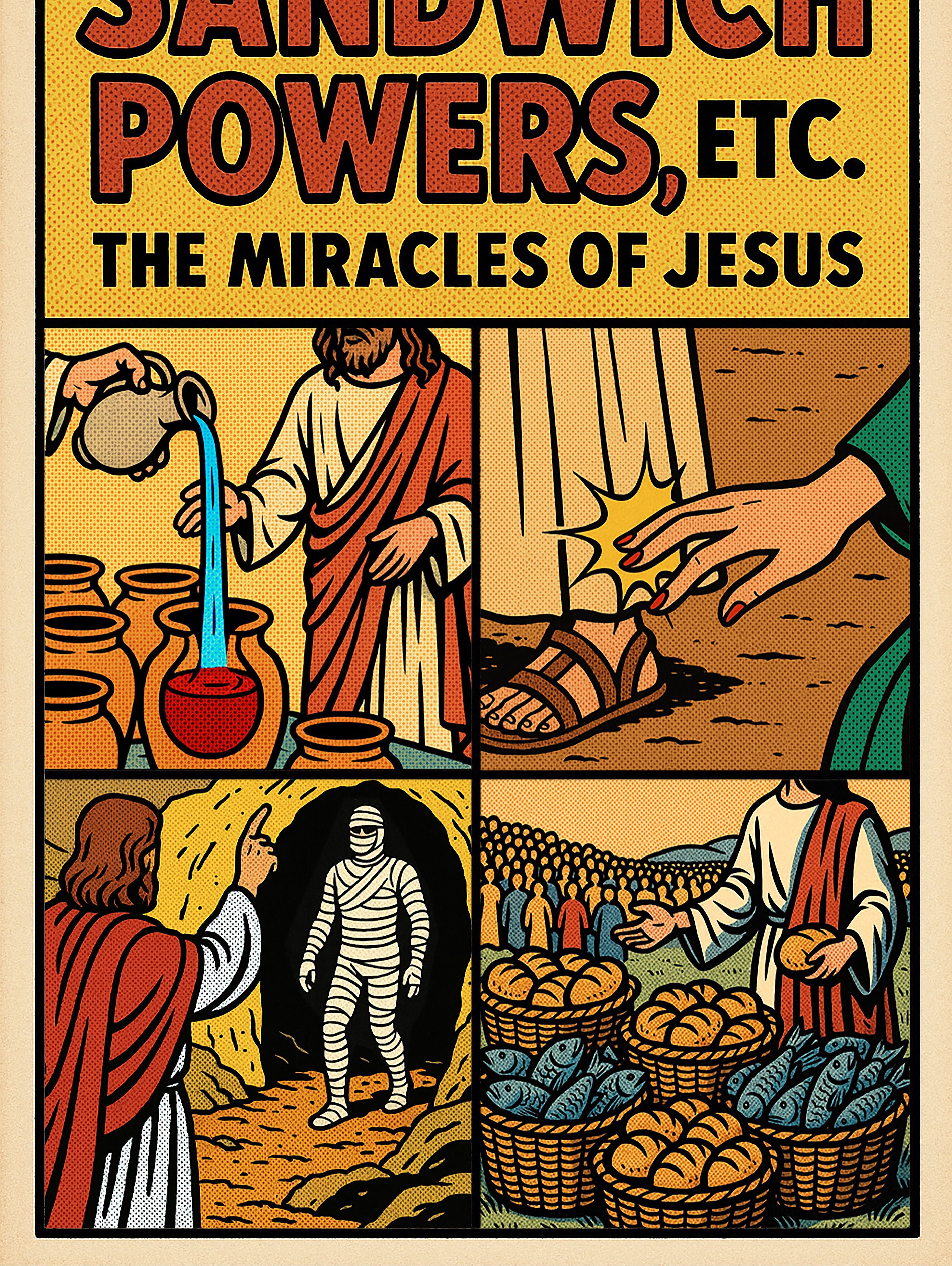
*We were glad to have Tommie sing a special as part of our worship on Sunday. She sang after the reading of the Scripture for the Sermon. It is included in the audio.
Mark 2:1-12; Luke 5:17-35; Matthew 9:2-8
Pastoral Prayer: Holy Father, Your story includes the history of a people with whom You persist in showing Your love and mercy. Amaze us again and again, no matter who or what keeps people from You or You from people, that the Son reveals Your mercy to all who are refugees from Sin and in need of walking free. Make us hear Your Word today, the Word that sets us free indeed. May the words of my mouth and the meditation of all our hearts be pleasing in Your sight, O Lord, our Rock and our Redeemer. And all God’s people say, Amen.
My friend David Zahl relays a story the late pastor and theologian Jim Nestigan told. Jim spent a season flying the country, speaking at conferences. At six feet, five inches, Jim was a tall man. The tall Scandinavian had a lifelong appreciation for the Nordic beer brewing tradition, and it showed. That means he was tall and big.
David writes,
Because of his size, Jim was not a fan of planes, particularly not of coast-to-coast flights. After shoehorning himself into a window seat one day, a man of similar dimensions sat down next to him. “There we were,” Jim says, “like two heads on one pimple.”
Since they were practically on top of each other, the two men began talking. His seatmate asked what Jim did for a living, and Jim said he was a preacher of the gospel. “Almost as soon as I got the words out, he shouted back at me over the plane’s take-off-noise: I’m not a believer!”
Matthew, Mark, and Luke tell the story of a full house. Think of the house as full as the two seats filled by Jim and his seatmate on that cross-country flight. Each of the Gospel writers makes it clear that the house was so full that a standing crowd had gathered at the door, preventing anyone else from entering. It is important to note that Jesus was speaking the Word to the gathered crowd.
Already, in the first chapter of his Gospel, Mark relayed that Jesus had liberated a man with an unclean spirit in the synagogue. He had relieved Peter’s mother-in-law of a fever. Jesus had created such a stir that all who were sick and possessed sought Jesus out for healing and freedom. Chapter 1 ends with Jesus curing a leper.
And when a crowd gathered, you may be sure that Jesus did what Mark has already told us Jesus did,
Jesus came to Galilee, proclaiming the good news of God, and saying, “The time is fulfilled, and the kingdom of God has come near; repent and believe in the good news.”
When we read Mark’s Gospel, we must listen carefully, for he moves quickly to make plain that the nearness of the kingdom includes any and all who are refugees of the Powers of Sin and Death, and to the Powers of Sin and Death themselves. That means that the Powers of Sin and death have reigned in a way that has left people captive to disease and dis-ease - imperiled and imprisoned.
David goes on,
But the man was curious, so once they reached cruising altitude, he asked Jim what it was like being a preacher. “After a bit, he says, to me again: ‘I’m not a believer.’ So I say to him: ‘Okay, but it doesn’t change anything - he’s already gone and done it all for you whether you like it or not.’”
More than two-thirds of my life has been dedicated to ministry, both as a volunteer and vocationally. Every so often, I meet someone who thinks of themselves as the most notorious sinner. “If I came to church, the roof would fall in.” Just a month or so ago, I was talking with some new friends. They made the same claim. There is a lot of competition to take Saul’s mantle as the Chief of Sinners. That self-designation by those we meet is, in fact, a subtle expression of pride. No one believes the roof will fall in.
Someone should have inspected the roof where Jesus held his house party. Four friends carrying a paralyzed friend could not gain entrance to the house. They improvised and found a way to unroof the roof. That is the literal rendering of their dismantling of the house's roof. The friends let their friend down as if lowered in a Stokes basket. The house party was disrupted. And what follows is an irruption.
Miracles are irruptions. In philosophy, an irruption is an event that exposes what is real. When we say, “He or she showed their true colors,” we are claiming that what appears to be uncharacteristic is, in fact, their true character. When we read the miracle stories in the Scriptures, we are not peering into an aberration, something that is out of character. We are being given a window into what will be, what the King will do, and what the Kingdom is like. In other words, miracles reveal the true character of the King, who is also the Kingdom.
Here, the paralytic catalyzes the irruption in more than one way. The paralyzed man would have been seen as either the sinner responsible for his condition, or he suffered the consequences of his parents’ sins. Ben Witherington III puts it this way,
If a person’s body was not whole, either that person himself or, if it was a birth defect, his parents had sinned. Such a person very readily became socially ostracized not only because of the Levitical purity codes but also because the assumption that he had been cursed by God because of his own or his family’s sin. And of course, the doors of full participation in the life of the synagogue or normal social events were also closed to such a person.
The policing of those who should be kept from the synagogue and distanced from the social life of the community was taken up by those Luke describes as,
. . . the Pharisees and the teachers of the law sitting nearby.
This group is following Jesus to see how he might slip up, if and how he might not live up to their expectations of holiness, as desired by the Pharisees, and if and how he might transgress the law, as evaluated by the teachers of the law.
Not only is the religiously constructed social system aimed at marginalizing those considered sinners or the object lesson of sinners, but the Powers of Sin and Death operate to paralyze us with guilt and shame. Put another way, the Powers of Sin and Death work every angle to convince us how awful we are and how awful God is.
Jim’s story continues,
The man then went quiet for a bit. When he started talking again, in what felt apropos of nothing, he proceeded to tell Jim stories about the Vietnam War. He had served as an infantryman in some of the conflict’s bloodiest battles - Khe Sanh, the Tet Offensive, Hamburger Hill. “I did terrible things for my country,” the man said. “And when I came home my country didn’t want me to talk about it. I’ve had a terrible time living with it, living with myself.”
This went on the whole flight, the man unloading all the awful things he’d seen and done.
Before the friends unroofed the roof. Before the friends let their friend down in front of Jesus. The news of Jesus had wrought faith in the five of them. Capernaum Talk had ensured there was no quarter in all the town that did not know of Jesus. They did not go to the house and then find faith. They heard the Word of Jesus, and that Word birthed faith in them, and there was no other place they could go. They went to the house where they would find Jesus.
Faith is the assurance of things hoped for, the conviction of things not seen.
Child, your sins are forgiven.
The miracle of forgiveness is the irruption in the story. Jesus is not offering forgiveness in the Temple or the result of some religious ritual, but by His very Word. Jesus does not engage in a theological debate regarding the cause of the man’s paralysis but assumes the reality of the Powers that imprison and imperil human beings. Neither does he take up arms against the Pharisees and teachers of the law, but instead invites them to experience the irruption, the in-breaking of the King and Kingdom into the world of their time and space, offering them a vision of God’s future Kingdom.
Can he do that?!
Shocked that anyone would dare grant forgiveness outside the Temple and without exercising the proper ritual, the investigators presumed Jesus had blasphemed, that he self-identified as the One Who Forgives - God alone. Simeon had forecast that Jesus would reveal the thoughts of many. And there they sat, their thoughts exposed.
Can he do that?!
As they approached their destination, Jim asked, “Have you confessed all the sins now that have been troubling you?”
“What do you mean, confessed? I’ve never confessed,” the man replied.
“You’ve been confessing your sins to me this whole flight long,” Jim said, “And I’ve been commanded by Christ Jesus that when I hear a confession like that, to hand over the goods and speak a particular word to you. So, do you have any more sins burdening you? If so, throw them in there.”
I’m done now.” the man said. “I’m finished.”
At this point he grabbed Jim’s hand as though he’d just had a second thought. “But I told you - I’m not a believer. I don’t have any faith in me.”
Jim, however, was unbuckling his seatbelt and in the process of squeeing himself out of the row. “Well, that’s quite all right, brother,” he said. “Nobody has faith inside them. Jesus says that what’s inside of you is what's wrong with the world. I’m going to speak faith into you.”
He stood up. The seatbelt sign had already dinged, though, and the tray tables were secured in their upright positions. The flight attendant noticed what was going on and started objecting: “Sir - sir - you can’t do that. You must be seated immediately. You can’t do that.”
“Can’t do it?” said Jim. “Ma’am, Christ our Lord commands me to do it.”
She gave him a fearful look, worried that he might evangelize her next. The other passengers were going bananas. Jim ignored them all, turning to his neighbor and putting his hand on the man’s head. “In the name of Jesus Christ and by his authority, I declare the entire forgiveness of all your sins.”
“You - you can do that,” the man whispered.
“I can do it. I must. Christ compels me to do it. I just did it and I’ll do it again.”
He then did, loud enough for everyone on that plane to hear: “In the name of Jesus Christ and by his authority, I declare unto you the entire forgiveness of all your sins.”
The man started sobbing uncontrollably, his shirt soon soaked from the tears. Jim sat down and put his arms around the man, the way one would around an inconsolable child. The flight attendant and all the rest who’d been fussing went silent. They seem to recognize that something holy was happening in front of them.
Surely those investigating Jesus would have been forced to wrestle with Isaiah,
Then the eyes of the blind shall be opened,
and the ears of the deaf unstopped,
then the lame shall leap like a deer,
and the tongue of the speechless sing for joy.
Jesus does not forgive sins as a representative, not on behalf of a religious system represented in the Temple. Jesus does not forgive sins as an enforcer of religious rituals. Jesus forgives sins, and that is the irruption - the reality of the King and Kingdom.
Jesus reveals that He is the Temple; John referred to Him as the Tabernacle, the portable dwelling place of God. Jesus is not introducing a new system. He is giving us the Triune God. Jesus reveals that he forgives apart from the performance of any ritual. Jesus forgives by the Power of His Word.
As the plane was landing, the man gathered himself enough to ask Jim to absolve him again, and Jim obliged, repeating the same words. The man laughed and wiped his eyes and said, “Gosh, if that’s true, it’s the best news I’ve ever heard. I just can’t believe it. It would take a miracle for me to believe something so crazy good.”
Jim chuckled. “Yep, it takes a miracle for all of us. It takes a miracle for every last one of us.”
Matthew, Mark, and Luke relay that everyone was amazed. That means not just those inside the house and those outside the house. They were all, including the Pharisees and the teachers of the law, all amazed! You could say that Jesus brought the house down on the house party! And note - we religious types need the roof falling on us. Rather than assume the role of investigators, enforcers, and judges, we give in to amazement - amazed by the miracle of our own forgiveness.
David continues with the story,
If that were the end of the story, it would be a doozy. But as both men were retrieving their bags from the overhead compartment, Jim pulled his card out and handed it to his seatmate. “You’re likely not going to believe your forgiveness tomorrow or the next day or a week from now. When you stop having faith in it, call me and I’ll bear witness to you all over again. I’ll keep on doing it until you do - you really do - trust and believe it.”
From that day forward, the man called Jim every day to hear him declare the forgiveness of the gospel. “It got to be he couldn’t live without it,” Jim says. “And I bore witness to him every day right up to the day he died. I told him: In the name of Jesus Christ, I forgive you all your sins. I wanted the last words he heard in this life to be the first words he would hear Jesus himself say to him in the next life.”
Child, your sins are forgiven!
Can he do that?!
Yes, He can do that and does!
And they all glorified God! All of them.
And today we hear Jesus say, “Welcome Home!”
great sermon Todd!