
Deadheading
Shiny Object Status

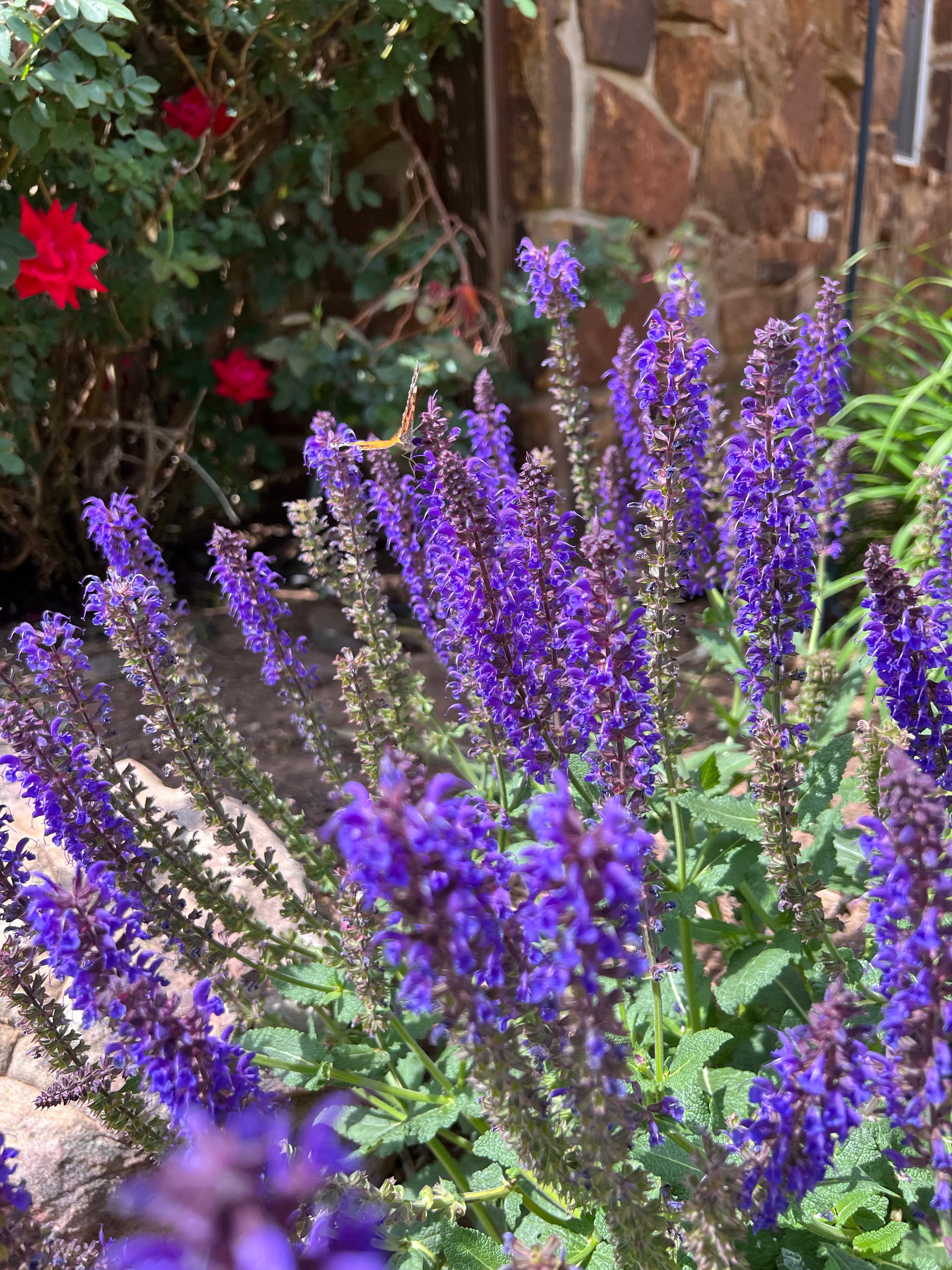
No, this is not a post about Grateful Dead fans.
“Look for the spent blooms,” I said.
“What?” was his response.
“Notice the difference between the stems that are full of purple blooms and those that look like the petals have fallen off,” I responded.
“Ah.”
After a few demonstrations, I left him with almost a dozen plants to deadhead in our church flower beds. He returned to report . . . an hour later.
He was finished.
“Well, how did you do?” I asked.
He held up his hand and performed that gesture that conveys, “So, so.”
I went out to see the results. He may have been finished. The task was not.
Cutting away the spent, the dead, the no longer useful is hard work. It is easier to shove it into a corner and enjoy the new, the different, the easier.
More than a decade ago we built a shop building. I wanted a place to work on a project car or pickup. And, the thought of storing stuff on ground level rather than in the attic sounded like solid future planning as I was entering my fifth decade.
We visited the contractor I had decided to use for the project. He invited us over to see his shop to get an idea of their process. He told me.
“Have a plan. We do. If it comes out from the house to the shop for storage and we don’t touch it for twelve months, we get rid of it.”
The idea was, in part, that you may have seasonal items you use annually so they will be spared. But, if moving them from the house to the shop was just to avoid throwing them out, then establish a regular habit to stop enabling yourself from avoiding the inevitable.
We have abided by that suggestion for the most part.
What is hard for me is that like my Dad, who was like his Dad, I tend to hold on to some items because,
“You never know when you might need one of those.”
Used nuts and bolts, used scraps of wood and wire, and the three windows removed from the house when we remodeled the back porch. Who knows?
We hold on to what is no longer useful thinking maybe we can fix it. We keep what we may eventually need but don’t know when. Most of what we keep once held shiny object status. Now that the sheen is off the nostalgia of what it was is the only thing keeping it from File 13.
My friend David was a pilot for Southwest Airlines before retiring. Due to the way Southwest plans its flight schedules, some circumstances require an empty plane to be flown to the destination from where it will begin its planned route the next day.
David told me it is called deadheading. No fares on board, just the flight crew. Sounds expensive!
My friend Jason reminded me that when the Apostle Paul wrote about idols, barren deities, he intended to make the point that these deities we create, the idols we hold, do what they promise. For a time they are shiny and new. They hold a power over us that shapes how we order our days and our lives. We even find groups to join that share our affection for these shiny objects.
Then, one day, they no longer deliver on their promise.
Like the promise of a burgeoning bloom, space in an empty shop, or the fares lost in an empty plane, the idols of our lives let us down.
What about the young man learning to deadhead salvia?
The short story is that his Mom knew he needed an opportunity to cut away some things that needed to be deadheaded. Spending a day a week with us might provide an occasion to learn some skills that also provide the occasion to learn to cut away what leads to dead ends. Without anyone to provide an illustration or three, he may end up like all of us with shops filled with once-shiny objects.
We like to think only adolescents need to learn. We often think being tell-assertive is the best way to accomplish the task. Over time we learn that telling is not the best answer. Showing is. That is, here is how you deadhead salvia since you never have. Here is what it means to clean out the shop and here is the value in getting a plane in position to provide the needed fares.
God’s promise is worth repeating. It is new and fresh every morning so the Songwriter in the Scriptures makes clear.
While Salvia offers an illustration of cutting away what is spent and dead, the idols of our lives that no longer live up to their promise, there is another way to think about Salvia, an illustration in the opposite direction, if you will.
Removing our spent, dead idols by God’s Spirit, makes way for the beauty of the eternal nature of the Promise of God made actual for us, to us, and with us in the living Jesus who Is Lord.
The Sixth Thesis of the Barmen Declaration rejects the temptation to use the Good News as we want, in service to our ideas and agendas, to our goals and attempts at success. Placing cut Salvia blooms in a vase is like removing the Good News from its source to add temporal beauty in service to our vision. Yes, a bouquet enhances the surroundings, but those flowers are cut from what gives them life. But, the life-giving food supply is removed.
Making of the Gospel of Jesus Christ the means to our end does the same to us. We starve.